
Nationhood, by Marcus Garvey

I really began to rethink my views about nationhood after reading The Philosophy and Opinions of Marcus Garvey, published by his daughter Amy Jacques-Garvey in 1923. I had never even heard of Marcus Garvey until National Public Radio played some Reggae songs dedicated to Garvey on one of its programs, perhaps on "Afro-Pop". (He was born in Jamaica.)
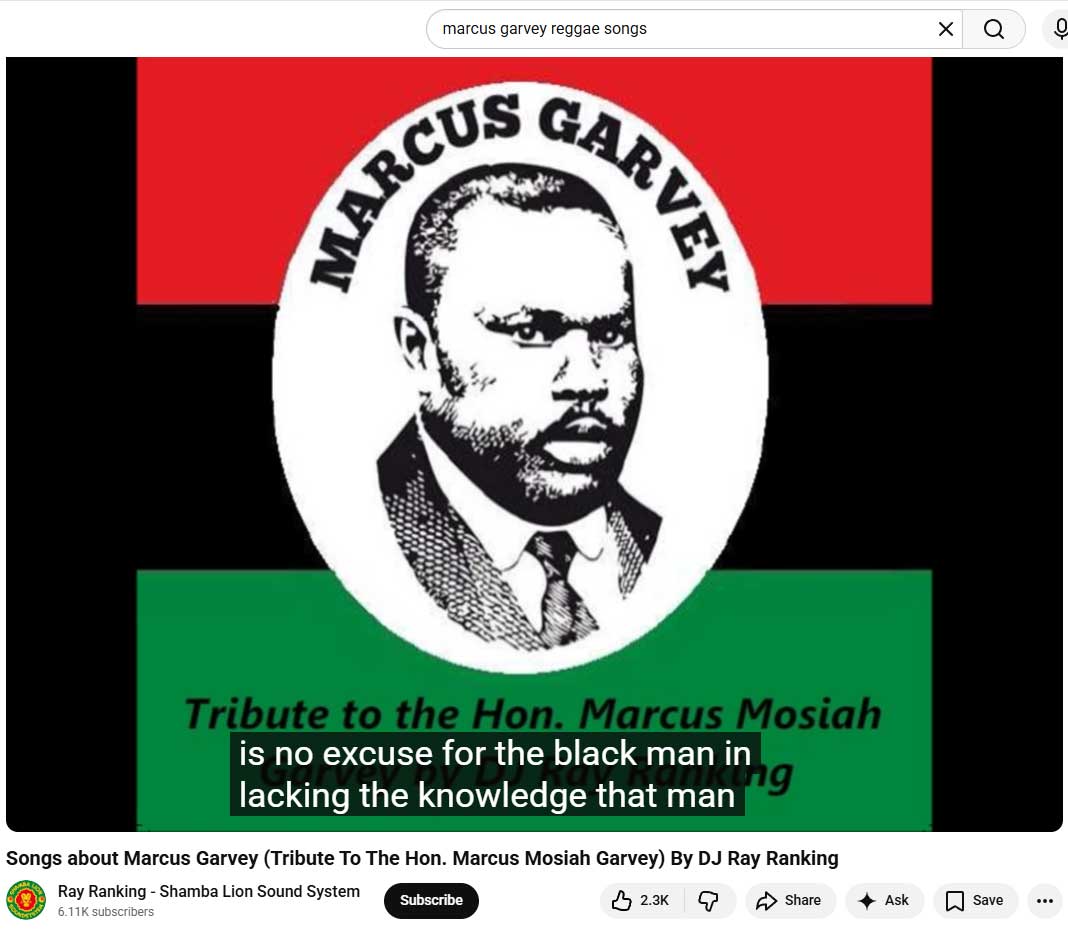
Garvey helped me to understand that, if you are not striving toward self-government, you are only feeding yourselves into a power vacuum. You have to start with educating yourselves. He said that only education gives you the impetus to think outside the box, connects you to the advances in the human experience, and works like an organizational mentor, to allow you to entertain ideas outside the realm of your experience.

A leader has to advertise nationhood to a prospective audience, its future citizenry. He has to sell its advantages the same way he sells a house or vehicle, because a nation needs constitutional vehicles to move it forward and constitutional dimensions to house it. A leader has to define the character of the nation, give it its philosophical orientation, and administrative vector.
The Republicans understand the parameters of nationhood better than the Democrats, who rely on a democratic mandate to orient a government. The ground underneath a democracy is subject to shifting, depending on who leads and what agenda he pursues. That makes a democracy turn into a battlefield of factions, as each side tries to out-vote the other. To the best of my knowledge, the U.S. Connstitution does not mention "Democracy" a single time, because the Founders did not trust its fluctuations or tendency to mob-rule.
A constitution sells itself to a people because its terms promise stability and prosperity, and because the terms do not change. They maintain the character of the nation, regardless of the persona or stature of its leaders. The constitution provides a new nation with its philosophical resource to enable its consistent daily functioning.
Democrats say Democracy will work fine, if Americans will use it; but their leaders themselves may not have deep convictions on this point. Can they govern their own country? Can they bear to step away from the shelter of the Constitution? They criticize "Constitutional Originalism", saying it is out of touch with the needs of the country. Whose "country", pray tell? The Democrats want out but not all the way.
Democrats, and other leftists claiming to be Democrats, post their opinions on Facebook promoting Democracy and decrying Capitalism; but if someone tells Democrats that they could have their own country and govern it as they see fit, they will reply that they are not interested in a nation.
The Democrat lack of definition on the Constitution issue should concern all Americans. It means the Constitution has to support both the warring Republicans and the restive but passive Democrats, but only the Republicans want to live under its protection. The Democrats want out, but not all the way out—only where it is convenient to them.
Why would anyone prefer the permanent stand-off that plagues our country, over the prospect of two new nations, each governing independently of the other?