
The Resentful Man

This post began when I was browsing through the The Manchurian Candidate for the fifteenth time—the novel, not the movies—published by Richard Condon in 1959. The novel starts with the abduction and brainwashing of an American platoon in Korea. The intelligence services of China and Russia psychoanalyze the soldiers of the platoon and make a decision about one soldier named Raymond Shaw, a marksman, whom they need to train as an assassin.

YouTube has posted the 1962 movie of The Manchurian Candidate in its entirety, and I urge my readers to view it. In this still from the movie, Dr. Yen Lo (Khigh Dhiegh) stands at the table in the center, lecturing the Russian and Chinese brass, while Raymond Shaw (Laurence Harvey) stands at the right, awaiting instructions.
The Chinese psychiatrist Yen Lo must explain to the Russian and Chinese brass why he has selected Shaw from the other men in the platoon. Dr. Yen describes Shaw's potential as an assassin in poetic terms. Yen comes off as cosmopolitan, whimsical, then genuinely compassionate about the tragedy of Raymond's life. He suggests to world-conqueror types, that if they want to get serious about an assassin or World domination, don't study armaments. Study human psychology.
Dr. Yen starts with the word "resentment" to describe Raymond's base emotion, and explains that it grows out of Raymond's timidity of character. "This weakness of will is compounded by his need to lean upon someone else's will, and now that has been taken care of for the rest of Raymond's life." Once Yen "cures" Raymond, Raymond will remain forever loyal to him.
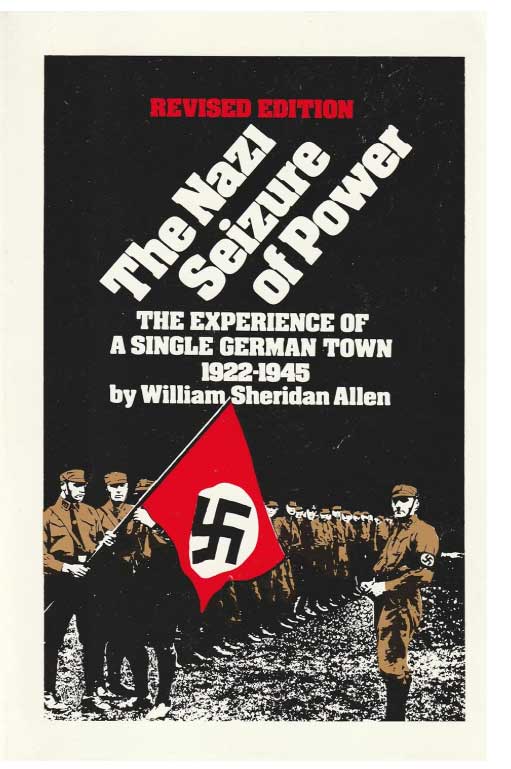
An interesting study of the resentful man, drawn from real life, is in the book The Nazi Seizure of Power, written by William Sheridan Allen. Professor Allen describes a local Nazi boss in a German city named Ernst Girmann:
(I)t is possible to construe the actions of Ernst Girmann after he came to power, as expressive of class divisions. . . . (M)any of the actions taken by Girmann and his closest friends suggest they were a product of social resentment. (Italics mine) Girmann was of the lower middle class and this undoubtedly made its mark upon him in a town where government and society were dominated by an elite that freely expressed its cool authority over the petite bourgeoisie as well as over the workers.
Dr. Yen also reveals that Raymond, for the most part, dislikes people, in varying degrees. When Yen asks him whom he dislikes the least in his platoon, Raymond names his commanding officer, Ben Marco. Yen nods approvingly and says to the Russians and Chinese, "Note how he is drawn always to authority."
Think about that for a moment. The resentful man dislikes other people, especially those better off than himself. He is timid and must lean upon someone else's will, and he is drawn toward authority. The principle holds true, whether in a left-wing context, or a right-wing one. What a scary scenario! Then our nation's enemies discover him and put him to work.
In our country, Blacks resent the Whites for slavery and discrimination. However, they are drawn to authority; so that no matter how angry or resentful they are at White injustice and White denigration of them, they cannot step away from White leadership. They are, instead, drawn to it. They lack the will to govern themselves, so they lean on the Whites to do it. This lack of an independent course and independent initiative, coupled with a resentful base-emotion, worries me a lot.
How can Americans ignore the level of strife in our society? The mutual enmity and paranoia must concern our leaders and the people who vote for them. We see evidence of the strife and enmity in our media everyday. The nation's level of functional preparedness is no more than 50%, judging by the level of agreement on nearly any policy initiative, because the other 50% completely opposes it! Americans cannot endure this forever.
Unfortunately, a segment of each political party just loves to bite. irritate, and intimidate the voters in the other party. The parties themselves depend on this mutual enmity to coax the donors to make contributions; so there is little genuine political pressure from either party to resolve the enmity, or even control it.