
Leadership and Politicians
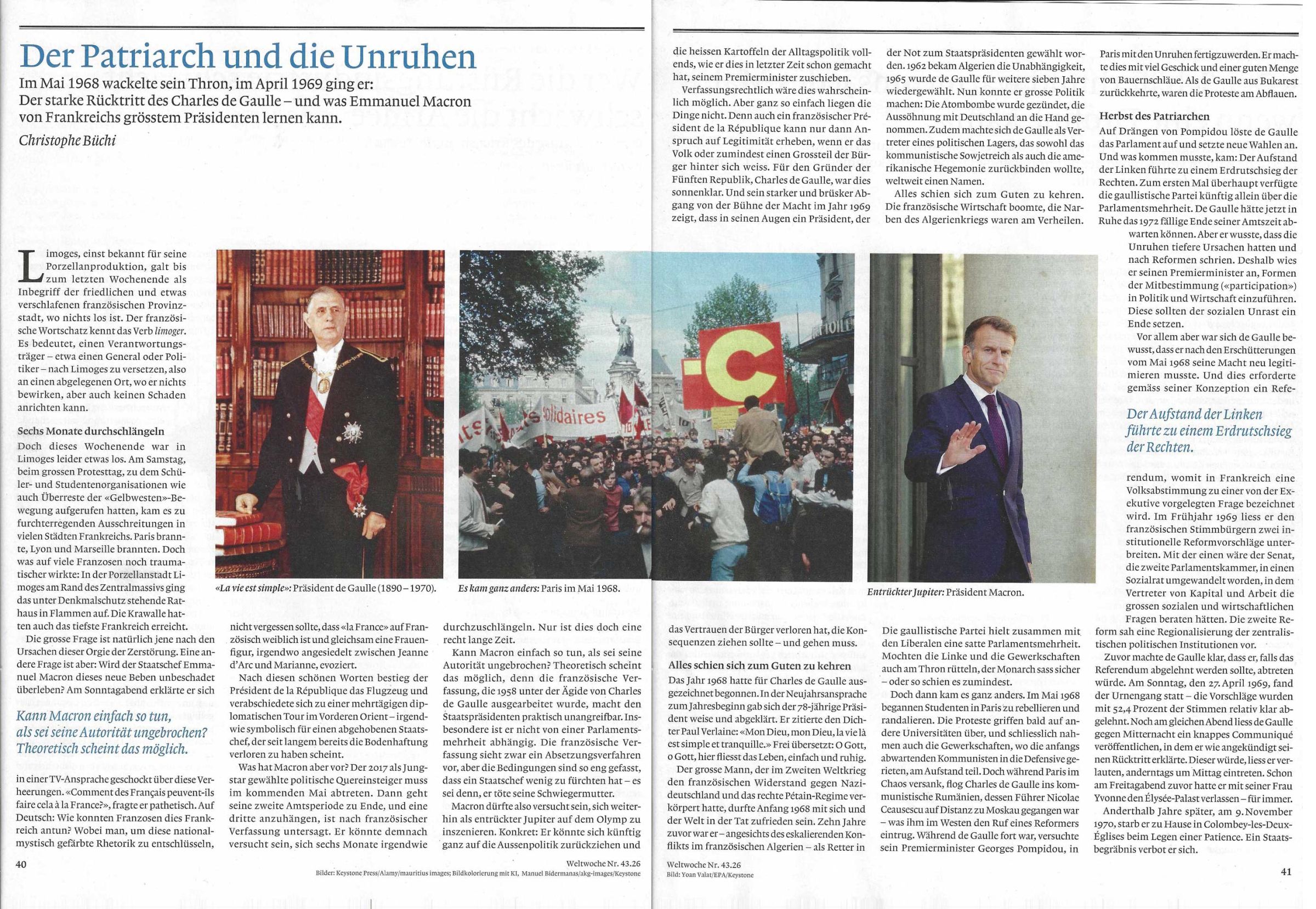
On 13th October, I posted an article, "We Need a Plan!" about Germany under the leadership of the Chancellor Friedrich Merz. I gathered the information for my post from an article in the magazine Tichys Einblick. Tichy quoted Merz's clumsy appeal to Germans for suggestions on how to lead the nation. "We must decide how to steer the German nation."
I thought Merz spoke as if to escape responsibility for making those decisions himself. I thought he failed to give Germans the sense that he already had an agenda for the proper steps to take, and that he could hit the ground running with them. Now Germans appear ready to turn Merz out for failing to give them orientation about his leadership.
From Germany, we move to France, which has experienced extraordinary violence in several cities. The images of war-torn streets and burning buildings has appeared in every periodical in Western Europe and America. The rioters appeared to have free rein to destroy whatever they pleased, and the government under French Prime Minister Emmanuel Macron did little to stop them.
The Swiss magazine Die Weltwoche took Prime Minister Macron to task for maintaining a passive, face-saving surrender to the violence. Weltwoche titled its article "Der Patriarch und die Unruhen," "de Gaulle and the Disorder." It discusses Macron first public expression of outrage about the recent violence: "How could French citizens do such a thing to their nation?"
Die Weltwoche said Macron spoke in a "pathetisch" tone of voice. Although pathetisch sounds like the English word "pathetic," the German word "pathetisch" means "theatrical." In other words, he doesn't express a personal sense of outrage. He words his outrage for public consumption, pursuant to his re-election plans, not even bothering to assure the public that it won't happen again.
Die Weltwoche reports that, "Nach diesen schönen Worten"—in English, "after uttering such pretty sentiments," Macron boarded an plane and flew to the Middle East for a diplomatic tour, leaving his nation to fend for itself. His decision to leave France at such a risky time indicates how much he has lost "Bodenhaftung"—literally, he has "lost touch with the earth beneath him." Can he not sense the fear in French citizens after the riots?
Macron, like Merz in Germany, has grown up in a parliamentary form of government, accustomed to coalitions and compromises in the context of normal day-to-day decision-making, of managing bureaucracies, and tending to the problems of infrastructure and foreign alliances. But if he has to move fast in the face of violent threats, the system fails.
National guard units, law enforcement agencies, and military leaders must have fretted, waiting for the politicians to respond to the crisis. The politicians would, first, read polling results, consult their coalition allies, and test the political atmosphere for rumblings from opposition parties—so that, by the time they responded, the situation was already hopelessly out of control.
Mutual antipathy between Right-wing and Left-wing parties is so severe, the governments of both France and Germany start each day hobbled by disunity; so what should a government do when it has to pull the nation out of a crisis?
Historians know exactly what happens. During the difficult years of the Great Depression, Germany could not govern itself because party hostility and the subsequent disunity defeated its efforts to move forward. Germans were ready to accept any leader who could defeat the disunity. The Nazis convinced Germans that Hitler would end the nation's parliamentary paralysis, which led to the rise of Adolf Hitler. France never could defeat its partisan paralysis, which led to its humiliating defeat in the subsequent War.